The demo: play for free with zero risk
The demo version lets you feel the rhythm of the crash game on virtual coins — no deposit, no sign-up, no money on the line. It's about the cleanest way to learn the mechanics, test a strategy and work out whether the format even suits you, all before you ever touch a real stake.
The demo version
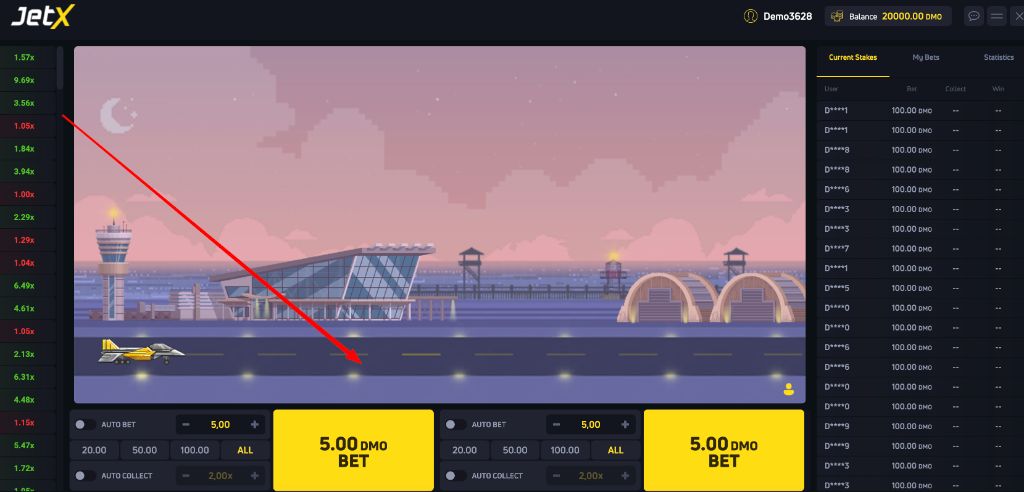
Tap the launch button to open the game field. The demo runs on a play balance — no real money is used at all.
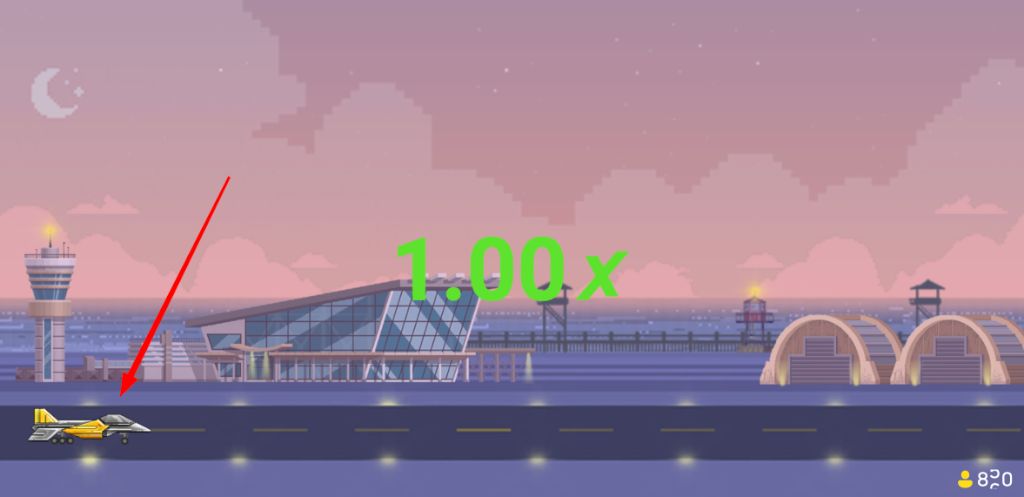
The demo mode shows the gameplay on a virtual balance. Wins and losses in the demo are not real and cannot be withdrawn.
Why the demo mode matters
Plenty of newcomers brush off the free version and dive straight into real-money play. That's a mistake. The demo sorts out several things at once, saving both your budget and your nerves.
Learn the mechanics
You can calmly work out how to bet, when to hit cashout and how the auto-modes behave — with no pressure of real losses.
Test strategies
Try the low-multiplier tactic or the double bet on play coins and see how they hold up.
No stress
The demo takes off the emotional load and helps you decide whether you even enjoy the format.
How the demo differs from real-money play
It's worth knowing the limits of the free mode so you don't build up false expectations when you switch to real stakes.
| Aspect | Demo mode | Real-money play |
|---|---|---|
| Balance | Virtual coins (DMO) | Real rupees (INR) |
| Deposit | Not needed | Required |
| Sign-up | Usually not needed | Required (18+) |
| Withdrawing wins | Not possible | Available |
| Mechanics and RTP | Identical | Identical |
| Emotion and risk | Minimal | Real |
"The demo honestly recreates the logic of the game, but it can't carry the main thing — the thrill of a real stake. Keep that in mind: ease in the free mode doesn't mean ease with money."
Moving from the demo to real play
Once you've settled into the free mode and made a clear-headed decision to play for money, work to a plan:
- Pick a trusted site with rupee support, UPI and a licence.
- Register and confirm you're an adult.
- Make a minimum deposit — no more than you're happy to spend on fun.
- Set your limits on loss and session length in advance.
- Apply what you practised in the demo, and don't drift from the plan under emotion.
The switch should be smooth and deliberate. Don't rush to raise stakes — give yourself time to get used to the feel of real risk.
What exactly to test in the free mode
So your time in the demo isn't wasted, treat it like a training ground, not aimless fun. Below is a list of tasks worth working through on purpose before moving to real stakes.
Reaction speed on cashout
The core skill of the crash game is hitting the cashout button before the flight ends. In the demo you can rehearse that tap hundreds of times, get a feel for how fast the multiplier climbs across different stretches, and build "muscle memory". Staking real money feels far calmer once the motion is on autopilot.
How the auto-modes behave
The free mode is the perfect place to understand how auto-bet and auto-cashout work together. Set the auto-cashout multiplier at 1.5x and watch a run of fifty rounds: you'll clearly see the ratio of successful cashouts to crashes, and that little stat will help you choose a cashout zone you're comfortable with.
Your emotional response
Even on virtual coins you'll notice how your mood shifts during a losing run or when you miss a big multiplier. That's a valuable observation: it tells you whether you lean towards impulsive decisions and just how strict your limits will need to be when playing for money.
Common myths about the demo
There are quite a few myths floating around the free mode that stop people using it properly. Here are the main ones, set straight.
- "The demo lets you win on purpose to lure you onto money." The mechanics and random number generator are identical in the free and real modes. That feeling of ease in the demo usually comes from the fact that you're not anxious about virtual coins, so you take bolder decisions.
- "Demo results predict how the real game will go." Every round is independent, and no stat from a free session carries over to a real one. The demo trains your skill, it doesn't forecast luck.
- "Since there's no risk in the demo, you can play with no plan at all." Quite the opposite: the safe environment is exactly where you should build discipline and the limit habit, then carry them over to real stakes.
Treat the free version like a flight simulator: nobody earns money on it, but it's where you build the skills that later save you in real flight.
Limits of the demo mode
For all its pluses, the free version has natural limits you should remember, so the switch to real play doesn't catch you off guard.
First, the demo doesn't carry the psychological weight of a real stake. When virtual coins are on the line, your brain doesn't pump out the same adrenaline, and decisions come easier. On a real balance the very same round feels totally different — your hand might shake, and a cashout multiplier you'd chosen earlier may suddenly seem far too early.
Second, the free mode locks you out of the bonuses, promos and tournaments that operators offer real-money players. So the money session's economics are different: a welcome bonus or free spins can noticeably change the size of your effective bankroll.
Third, the virtual balance refills itself, and that breeds a false sense of endless funds. In real play the bankroll is finite, which is exactly why money management becomes the key skill — one the demo only trains in part.
The demo as part of a healthy gaming habit
Seasoned players come back to the free mode well beyond the start. The demo is a handy ground to test a fresh tactic with no risk, to warm up before a session, and to reset emotionally after a rough run on real money. Instead of impulsively chasing losses, it's wiser to switch to the virtual balance, get a cool head back, and return to real play with a sober plan.
This approach fits right into responsible gaming. The free mode doesn't fan the thrill with real stakes, so it helps you keep distance between fun and financial risk. If you catch yourself wanting to play "to win it back" or to break your budget — that's a signal to head back to the demo, or to pause entirely.
When the demo is especially useful
- On your first meeting with the crash mechanics and their rhythm.
- When testing a new cashout strategy or auto-mode.
- After a string of losses — to cool off with no fresh spending.
- Before a big session — as a reaction warm-up.
- When you simply want a bit of fun without financial strain.
Technical requirements for the demo
One of the great things about crash games is how undemanding they are on your device. The demo launches in any modern HTML5 browser and needs no extra programs or plugins installed. That's enough for most phones, tablets and computers from recent years.
For comfortable play, what matters isn't the gadget's power but the stability of your internet connection. Since the cashout decision is made in a split second, any lag can ruin a round. So on a weak signal, better to put off even a free session. We'd suggest closing background tabs, checking your battery and turning off auto-dim so the screen doesn't go dark mid-flight.
A checklist before switching to real stakes
The free mode has done its job once you can confidently answer "yes" to a few control questions. Use this short list as a readiness gauge.
- I understand the mechanics. I know the round phases, can place a bet and cash out on time.
- I've got the auto-modes. I've set up auto-bet and auto-cashout and understand how they run my tactic.
- I've chosen a strategy. I have a clear profit-locking plan and I've tested it in the demo.
- I've set my limits. I know my budget, stop-loss and take-profit in advance.
- I control my emotions. I watched how I react to losing runs and I'm ready to keep discipline.
If even one point gives you doubt — head back to the free mode and practise more. Rushing on a real balance costs more than an extra hour of practice on virtual coins.
Common questions about the free mode
How many times can I launch the demo?
As often as you like. The virtual balance refills, and there's no cap on the number of sessions. So you can calmly drill your skills with no pressure at all.
Are the win odds different in the demo?
No. The random number generator and the round maths match the real game exactly. The only difference is the type of balance: in the demo it's virtual and can't be withdrawn.
Can demo results predict real-money play?
No. Every round is independent, and a lucky or unlucky free session tells you nothing about future results on a real balance. The demo builds skill and discipline, it doesn't forecast luck.
Do I need to register for the demo?
In most cases the free mode is available without creating an account. Sign-up and age confirmation are only needed to move on to real-money play.
Got the demo down? Time for the real game
Move to a reliable site, grab the welcome bonus and start with a minimum stake. Play responsibly.
Play Now